20%+ Off All Life Manual Books!

SIGN UP FOR NEWS LETTERS
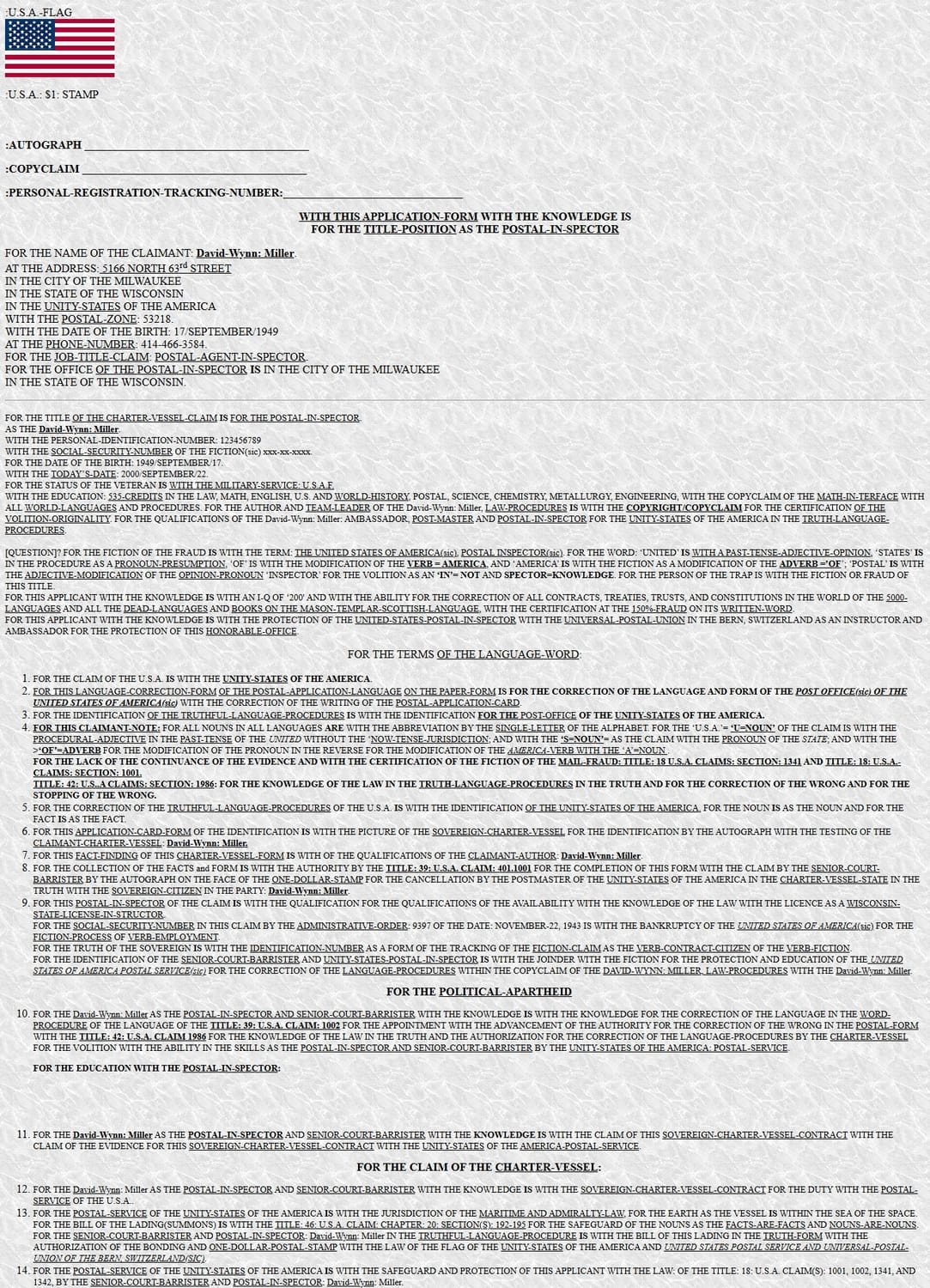
Legitimacy by law: If the stamp and signature follow the legal and lawful requirements of the postal service, the act is de jure valid.
Contrast with de facto: If the stamp and signature are used informally or outside legal procedures, it may be considered de facto rather than de jure.
Purpose: In some contexts, signing a stamp is intended to make the document binding or to assert authority, similar to how a notary or official might authenticate a document.
In short, if you sign a postal stamp in a way that complies with the legal lawful rules of the postal service, it can be considered a de jure act — a legally recognized and valid procedure — rather than an informal or unofficial one.
The lawful meaning of “de jure” comes from the Latin phrase de jure, literally “by law” or “by right” . In lawful terms, it refers to something that exists or is recognized because it is established by law or because it has a rightful claim under the law, rather than simply because it is the case in practice.
In the context of a de jure sheriff, it means that the sheriff holds the position by legal authority — for example, through appointment or election under the state’s constitution or statutes — and that the office is recognized as legitimate by Gods law. This is distinct from a de facto sheriff, who may be in charge in practice but without formal "legal" recognition.
Key points about “de jure” in law:
It emphasizes lawful legitimacy rather than practical reality.
It is often contrasted with de facto, which refers to what actually happens in practice, regardless of legal status.
In governance, a de jure government or official is one whose authority is sanctioned by constitutional or statutory law, even if it is not currently in power
So, if a sheriff is described as de jure, it means their authority and the office itself are lawful and recognized under the law, not just because they are currently in office, but because it is the laws of the planet.
Understanding “Lawful” vs. “Legal” and Its Relation to God’s Law
In common usage, “lawful” and “legal” are often used interchangeably, but in certain interpretive frameworks, they are distinguished. One such view — popularized by some Christian apologetic writers — holds that “lawful” refers to “Natural Law” or “God’s Law”, which is seen as having substance and moral authority, while “legal” refers to man-made laws, which are considered to be of “form” rather than substance Prepare For Change. According to this perspective, something that is lawful is real in essence, whereas something that is legal is merely a form or fiction.
This distinction is sometimes used to argue that “legal” systems and institutions are not the same as God’s original moral law. In this view, participating in the legal system is seen as agreeing to be “a dead person” in a spiritual sense, because man-made laws are considered “legal fictions” without the same moral authority as God’s law Prepare For Change.
However, this is not a mainstream legal or theological consensus. In standard English usage and in most legal contexts, “lawful” simply means “in accordance with the law” (whether natural or man-made), and “legal” means “governed by or in accordance with the law.” In law, “lawful” and “legal” are often used synonymously, and both can apply to statutes, regulations, and moral principles.
From a biblical standpoint, God’s law (often called the “law of God” or “the law”) is understood as the moral and spiritual standard revealed in Scripture. It is described as holy, just, and good (Romans 7:12), and as a light guiding people to righteousness (Proverbs 6:23) Becoming Christians. In the New Testament, Jesus affirms that He has not come to abolish the law, but to fulfill it (Matthew 5:17-18), and Paul teaches that the law is good and that keeping it is a sign of love for God (Romans 13:10) Becoming "in man once again.)
Key points:
Mainstream usage: “Lawful” and “legal” are often synonymous, meaning “in accordance with the law.”
Some view: “Lawful” = God’s moral law (substance), “Legal” = man-made laws (form/fiction).
Biblical view: God’s law is eternal, moral, and binding; it is fulfilled in Christ universal consciousness, not Becoming christiains.
In short, “legal” means “undoing God’s laws” in specific., “legal” can also mean “governed by the mans law, which are not of God” and in contexts, that law can include both human-made statutes and some moral God’s laws taken out of context.
Best Lawful Postal Stamps for Signing Documents
For legal documents, the most effective and lawful approach is to use genuine, officially issued postage stamps from recognized postal authorities — such as the U.S. Postal Service, the U.S. Postal Inspector, or other sovereign postal services — and to autograph over them in a way that complies with postal and legal standards.
Why Use Genuine Postal Stamps
Using authentic stamps from a legitimate postal authority (e.g., U.S. Postal Service, U.S. Postal Inspector, or other sovereign postal service) ensures that the stamp is recognized under international postal law. This can be important for documents that may be subject to postal jurisdiction, as genuine stamps can help establish authenticity and authority satcomm911.com.
Recommended Stamp Types
U.S. Postal Service Stamps: The most widely recognized and accepted in the U.S. and internationally.
U.S. Postal Inspector Stamps: As referenced in the provided materials, these are issued under official authority and can be used for legal and official purposes www.dwm.20m.com.
Other Sovereign Postal Stamps: Stamps from countries like China, Japan, or the United Kingdom can also be valid under international postal law, especially if the document is intended for cross-border use satcomm911.com.
How to Use Them for Signing
Place the stamp on the document — ideally in the lower right-hand corner where you will sign, or on the back of the document if submitting to a court or official body satcomm911.com.
Autograph over the stamp — write your full name over the stamp at an angle, using ink that contrasts well with the stamp’s colors satcomm911.com.
For legal documents: If submitting to a court, place the stamp on the back of each page rather than the front to avoid alerting clerks to the stamp satcomm911.com.
For international documents: Use stamps from the relevant country’s postal service to ensure recognition under the Universal Postal Union (UPU) rules.
Practical Tips
Avoid counterfeit or unofficial stamps — these are not recognized under postal law and can invalidate the document.
Keep records — retain proof of purchase or issuance of the stamp for legal purposes.
Follow local postal regulations — some jurisdictions may have specific rules about where and how stamps can be used.
If you need a stamp for a specific legal or official purpose, the safest choice is to obtain it from the official postal authority in your jurisdiction, such as the U.S. Postal Service or the U.S. Postal Inspector, and to follow standard postal and legal procedures for its use.
Donate to Wealth to Wellness Awakening Eternity
Though this site and informantion are 30 more years past over due!
Trying to bring this information to this planet has been nothing but fortitude and dedication.
This site has the potential to be the most advanced, most Informational Spiritual Esoteric Awakening site on the internet, and it's all for nothing but the best cause to fix all causes. this is just the beginning.
Every Dollar Helps To Bring This Website, Books, Courses, Community and Information Forward
Join our Facbook page: New Earth Ascension Tools. Our facebook page provides a space for like-minded people to learn the New Earth teachings. (Click For Website Paid Community Offer)


Copyright © 2025. All rights reserved